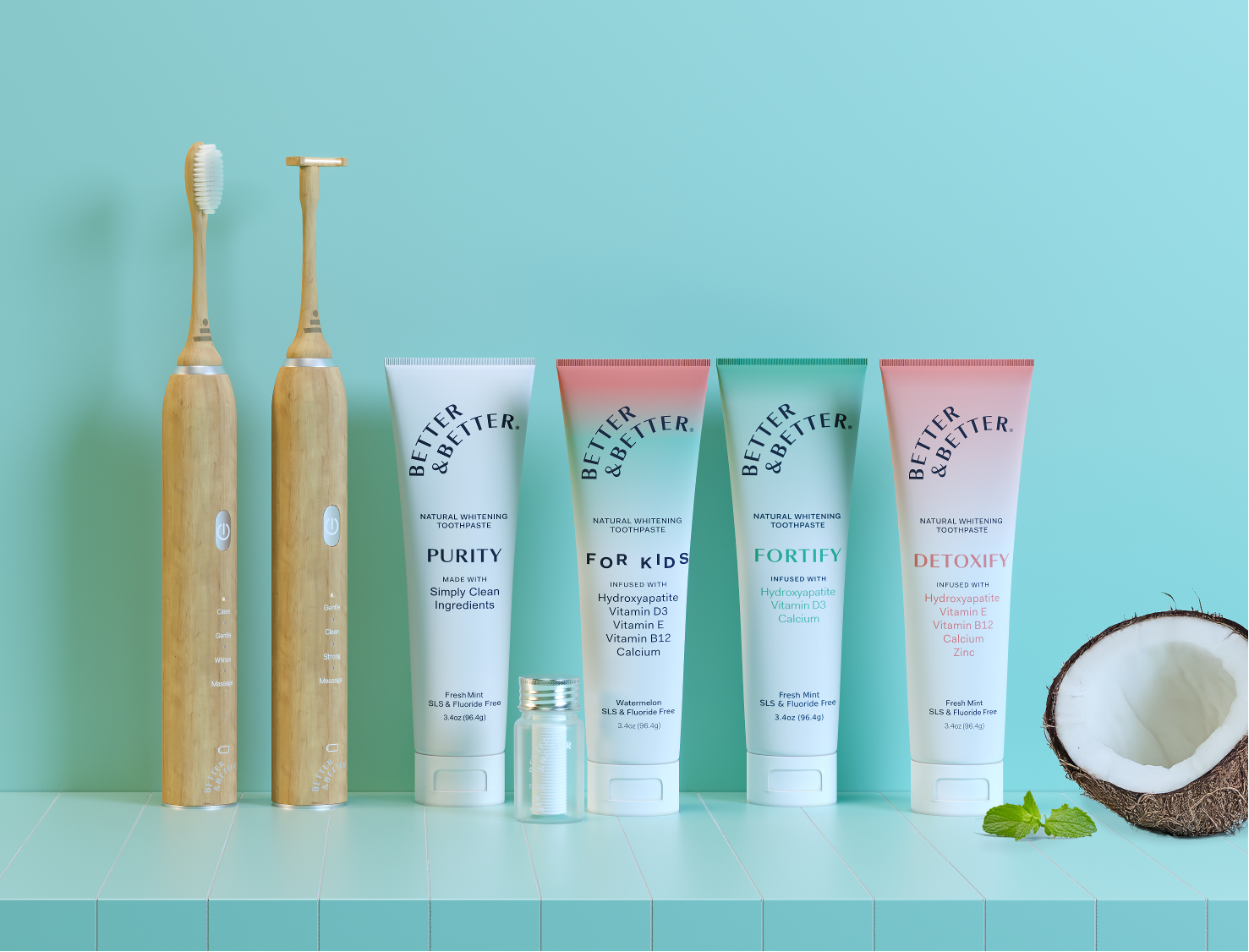
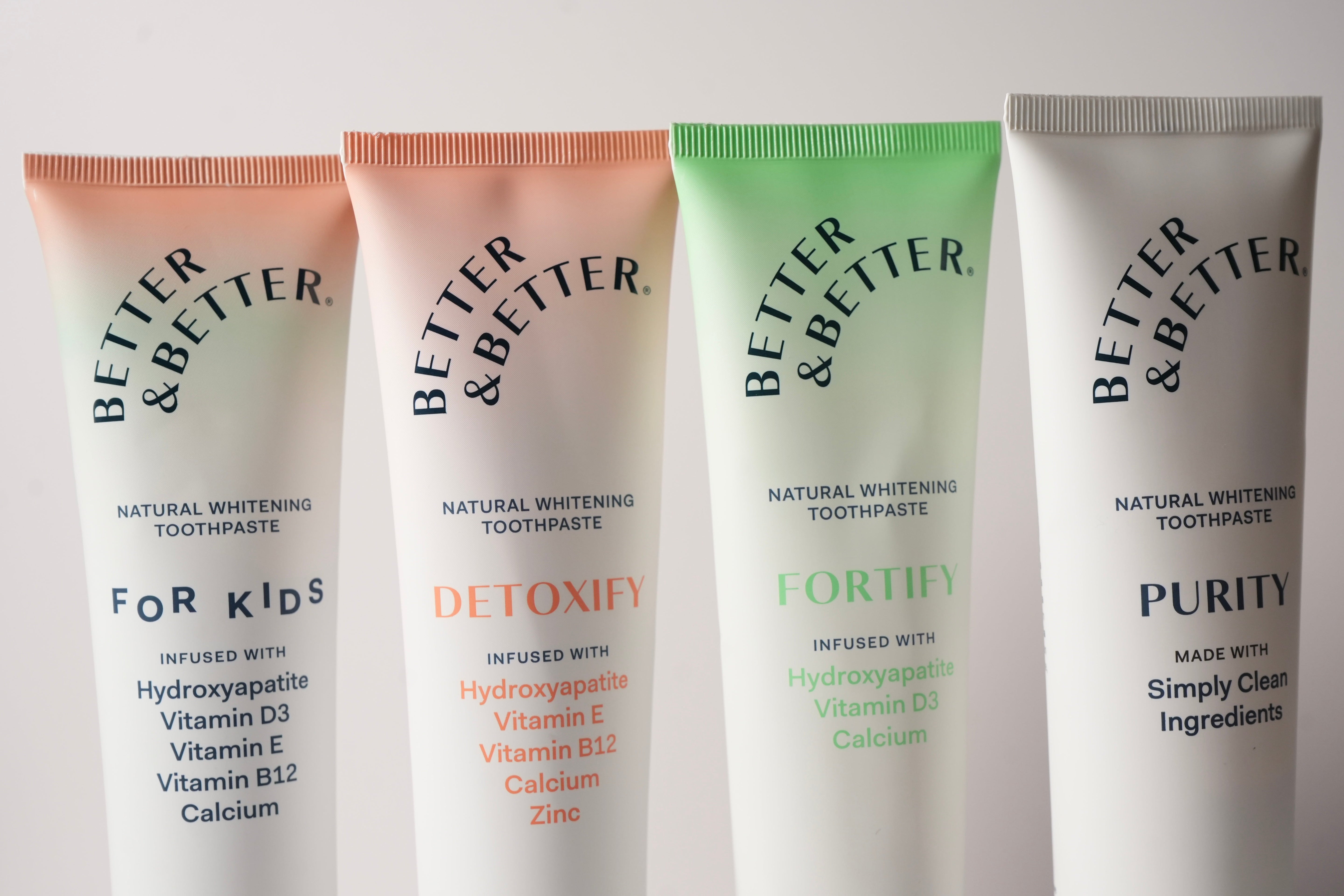
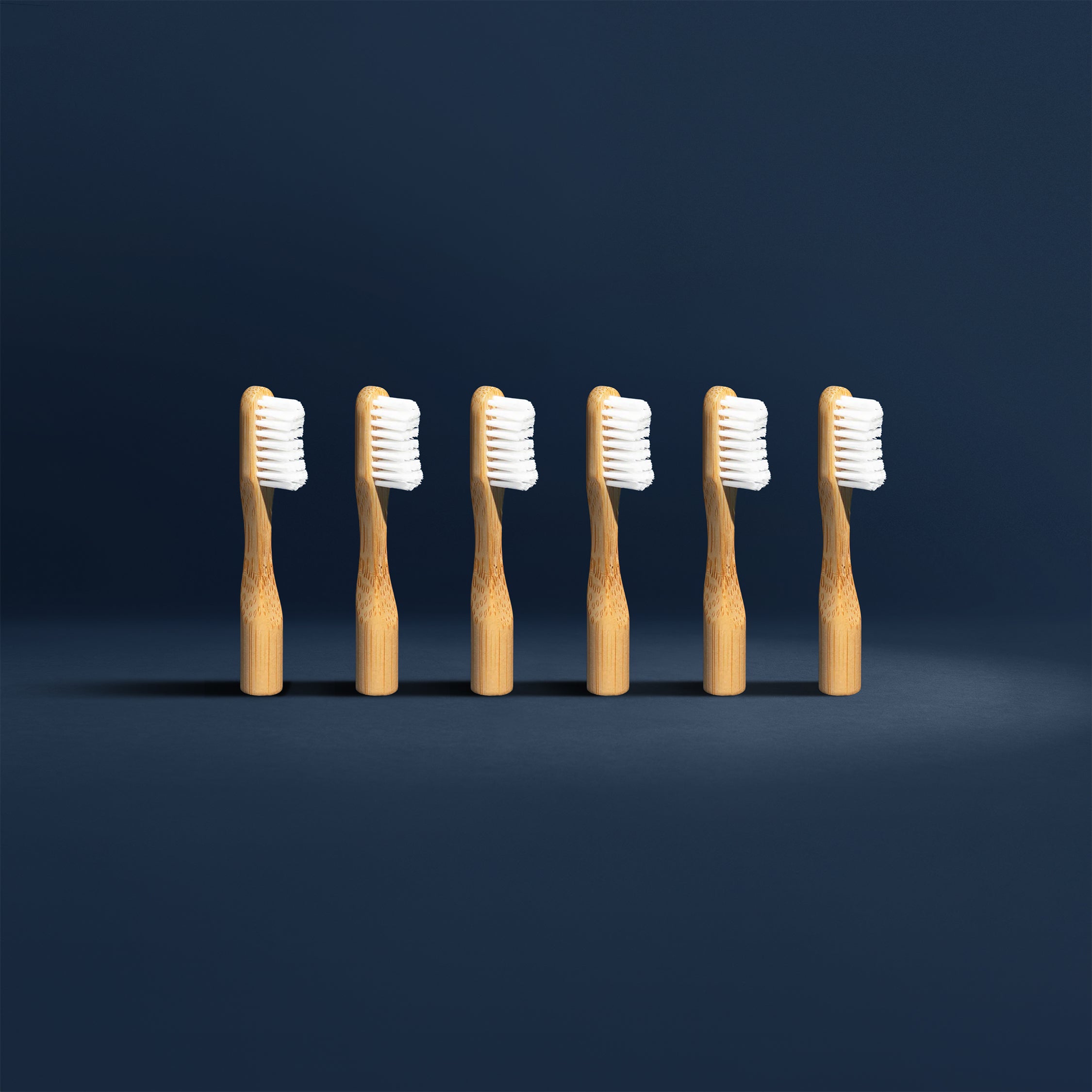
STEP UP YOUR ROUTINE WITH A BRUSH BETTER SET


Kids Bamboo Sonic Bundle
Regular price
$98.00
Sale price
$98.00
Regular price
$168.00
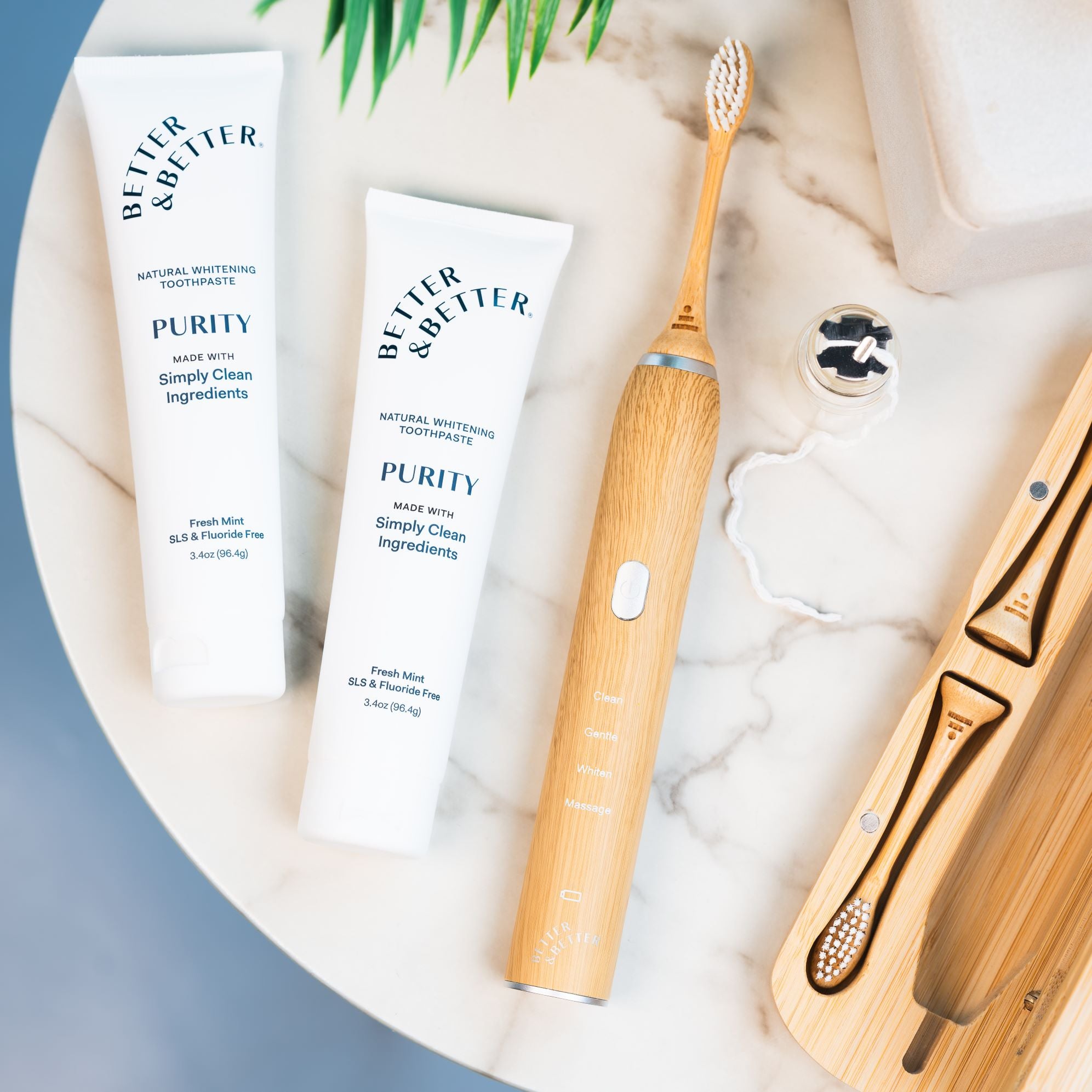
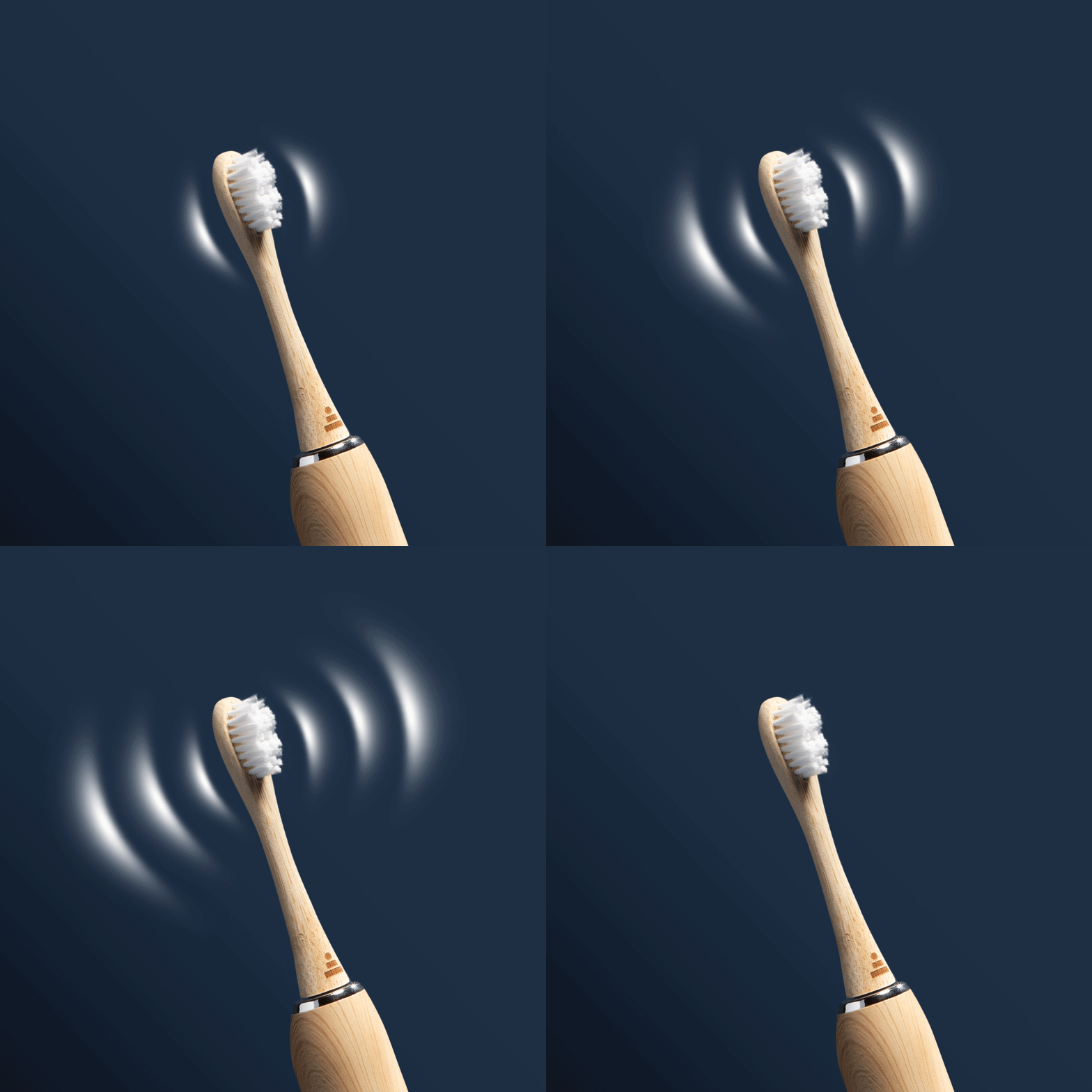
Bamboo Sonic & Purity Toothpaste Set
Regular price
$109.99
Sale price
$109.99
Regular price
$138.95

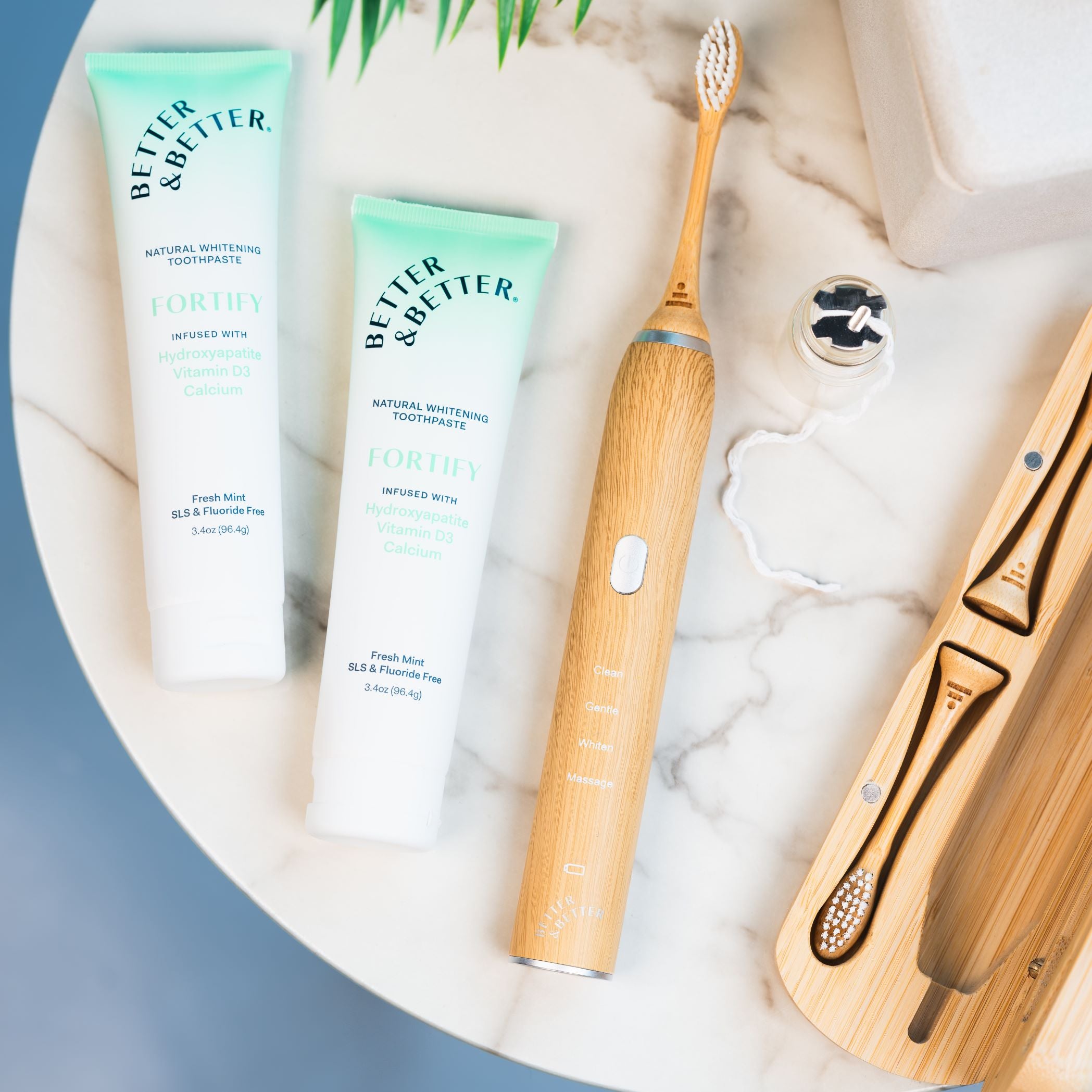
Bamboo Sonic & Fortify Vitamin D Toothpaste Set
Regular price
$119.99
Sale price
$119.99
Regular price
$171.99
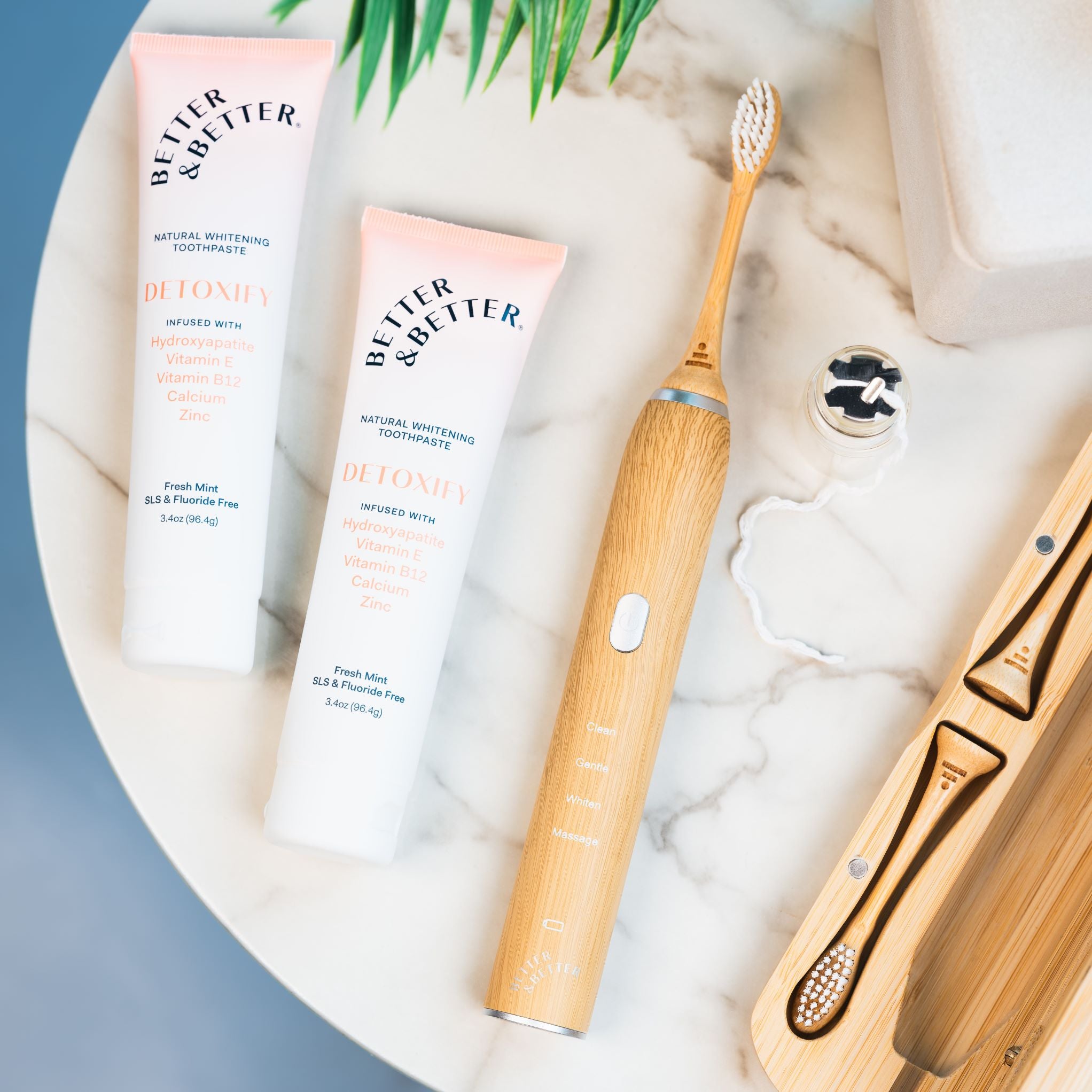
Bamboo Sonic & Detoxify Zinc Toothpaste Set
Regular price
$119.99
Sale price
$119.99
Regular price
$171.99


Toothpaste Sampler Set
Regular price
$44.99
Sale price
$44.99
Regular price
$50.99
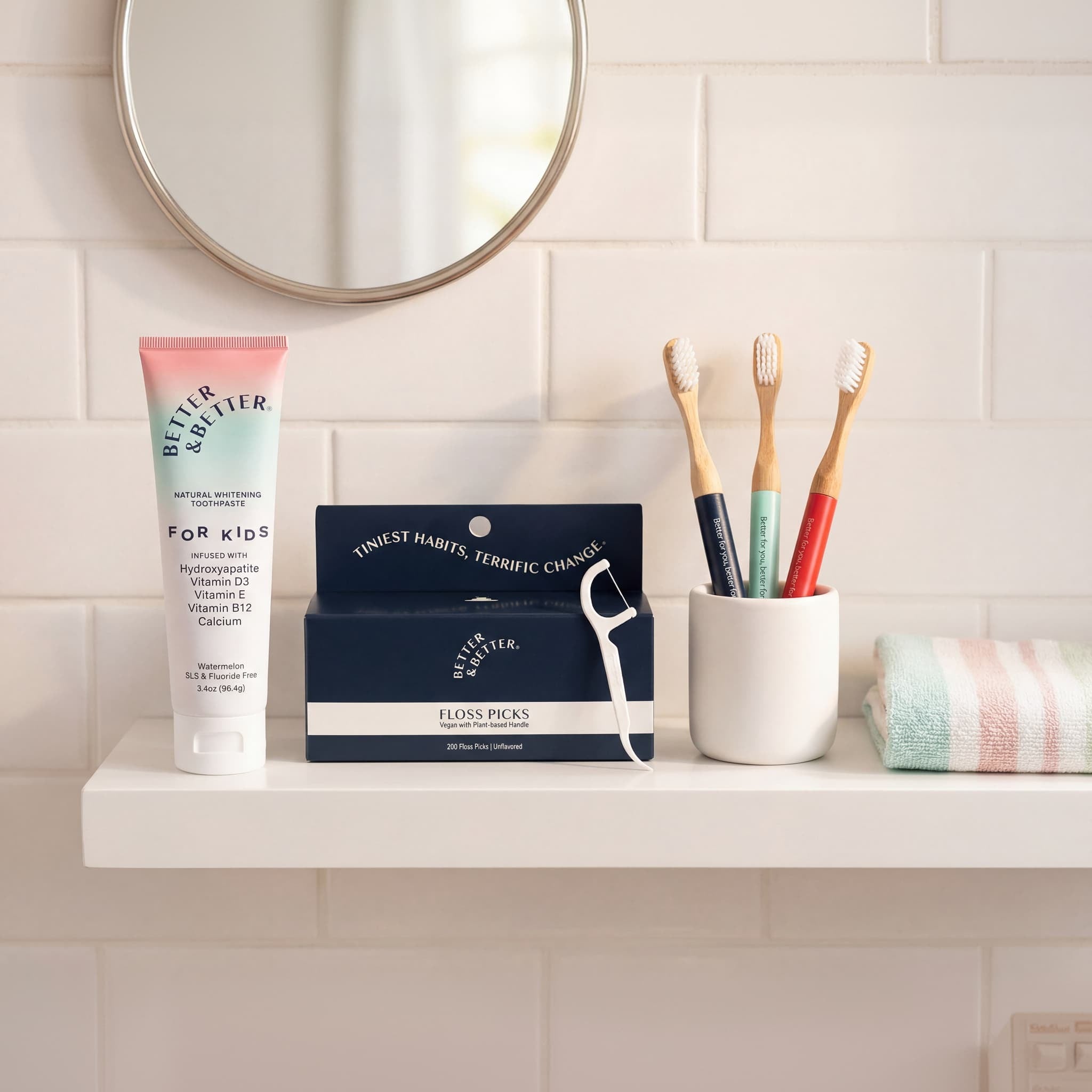

Kids Starter Set
Regular price
$49.00
Sale price
$49.00
Regular price
$63.00


Adult Starter Set - Detoxify
Regular price
$49.99
Sale price
$49.99
Regular price
$62.95


Purity Toothpaste 3-Pack
Regular price
$39.99
Sale price
$39.99
Regular price
$44.97
FURTHER READING

5 Common Toothbrushing Mistakes Kids Make (And How Parents Can Fix Them)
Teaching kids to brush their teeth sounds simple enough. Give them a toothbrush, demonstrate a few circular motions, and remind them to spit. What could possibly go wrong? Quite a bit, it turns out. Between rushing through the routine, brushing too hard, and forgetting their back molars exist, kids have plenty of opportunities to develop bad brushing habits. Most of these mistakes are easy to correct. Here are five common toothbrushing mistakes kids make, along with practical ways to help them build better habits. 1. Not Brushing Long Enough Two minutes can feel like an eternity when you're six years old, especially when there are cartoons to watch. Unfortunately, a quick once-over rarely provides enough time to clean every tooth properly. The American Dental Association recommends brushing for two full minutes, twice a day. How to fix it: Make the timing automatic. The Better & Better Kids Bamboo Sonic Toothbrush has a built-in two-minute timer with 30-second interval pulses that remind kids when to switch sections of their mouth. It's an easy way to establish a consistent routine without parents having to stand over the sink with a stopwatch. 2. Brushing Too Aggressively Kids sometimes assume that brushing harder means getting their teeth cleaner. However, aggressive scrubbing can irritate gums and contribute to enamel wear over time. This is especially concerning for children whose brushing technique is still developing. How to fix it: Teach kids to use gentle pressure and small, controlled movements. Soft bristles are important, too. Our Kids Bamboo Sonic Toothbrush uses 100% plant-based, soft bristles and up to 25,000 sonic microvibrations per minute to help clean teeth without aggressive scrubbing. Its Gentle mode offers another option for kids with sensitive teeth or gums. 3. Ignoring Their Back Teeth Front teeth get most of the attention because they're easy to see in the mirror. Molars, meanwhile, are left to fend for themselves. Those back teeth have deep grooves that can trap food and plaque, making them vulnerable to cavities. Permanent molars start appearing around age six, so learning to clean them properly is especially important. How to fix it: Have kids follow the same brushing sequence every time, covering the outer, inner, and chewing surfaces of every tooth. Parents should help younger children reach their back molars and check their technique until they can brush thoroughly on their own. 4. Using Too Much Toothpaste Toothpaste commercials have convinced generations of people that a toothbrush needs a giant, perfectly sculpted ribbon of paste to work properly. In reality, kids need much less. The ADA recommends a rice-grain-sized smear of toothpaste for children under three and a pea-sized amount for ages three through six. How to fix it: Parents should dispense the toothpaste themselves until children reliably use the right amount. Teach kids to spit out excess toothpaste and supervise brushing, particularly when they're young enough to mistake a fruity flavor for a snack. 5. Forgetting to Brush Along the Gumline Kids often concentrate on the visible surfaces of their teeth while completely overlooking the area where teeth meet gums. Plaque can accumulate along this edge, contributing to inflammation, redness, and bleeding. How to fix it: Show kids how to angle their toothbrush slightly toward the gumline and move gently along each tooth. A mirror can help them see where the bristles are going. Remind them that healthy brushing includes their gums, even if they can't see any food stuck there. Better Brushing Habits Start Early Most childhood brushing mistakes come down to technique, timing, and consistency. Fortunately, these are skills children can improve with practice and a little parental patience. Having the right tools can make the process easier. Our Kids Bamboo Sonic Toothbrush combines soft plant-based bristles, customizable cleaning modes, and a built-in timer to help children develop a more thorough brushing routine. And while kids might still need reminding to brush before bed, at least the toothbrush can handle the two-minute countdown.
Learn more
The Modern Diet Is Tough on Teeth. Here’s How You Can Help Them Recover.
Coffee. Sparkling water. Energy drinks before the gym. Modern diets expose teeth to a steady stream of acid throughout the day, which helps explain why more people are suddenly dealing with tooth sensitivity. Most of us aren’t thinking about enamel while we sip cold brew at 10 a.m. But dentists are increasingly seeing the effects of repeated acid exposure: weakened enamel, rougher tooth texture, and teeth that stain more easily over time. Whitening still dominates toothpaste marketing, but more people are starting to focus on something less cosmetic and more foundational: healing their enamel. 5 Everyday Habits That Put Stress on Your Teeth These are some of the biggest contributors to enamel erosion: 1. Coffee Coffee stains teeth, but the acidity is part of the problem too, especially when people sip it over several hours instead of drinking it quickly with food. Cold brew is often marketed as “less acidic,” which is true compared to regular coffee. But less acidic still means acidic. 2. Sparkling Water Sparkling water is still far better for teeth than soda, but carbonation creates acid. Many flavored versions also contain citric acid, which increases enamel exposure even more. The bigger issue is frequency. People tend to drink sparkling water continuously throughout the day. 3. Energy Drinks & Pre-Workouts Most energy drinks are extremely acidic, and many pre-workouts aren’t much better. Caffeine can also contribute to dry mouth, which reduces saliva production. That matters because saliva helps naturally protect and remineralize teeth. 4. Citrus & Wellness Drinks Lemon water, kombucha, apple cider vinegar drinks, citrus-heavy smoothies—modern wellness culture has introduced a surprising number of acidic habits into daily life. None of these are inherently bad. The issue is repeated exposure. 5. Constant Snacking Teeth need time to recover between acid attacks. Grazing throughout the day makes that difficult. Every snack or drink changes the environment inside your mouth, even briefly. Over time, the repetition adds up. Strong Enamel Matters More Than Ultra-White Teeth For years, oral-care marketing treated whitening like the ultimate goal. More dramatic whitening strips. Stronger whitening toothpastes. Faster results. The downside is that many whitening products rely on harsh abrasives or aggressive bleaching agents that can make sensitive teeth feel even worse. That’s why remineralization has become a much bigger conversation in oral care. Instead of focusing exclusively on removing stains, remineralization focuses on helping replenish minerals that teeth naturally lose through acid exposure and demineralization. People still want brighter teeth, obviously. But increasingly, they also want enamel that feels stronger, smoother, and less sensitive. How Hydroxyapatite Helps Support Enamel Hydroxyapatite sounds futuristic, but it’s actually a material already found in your teeth. It’s a naturally occurring mineral made of calcium and phosphorus, and it makes up most of your enamel and dentin. That’s part of why hydroxyapatite has become increasingly popular in toothpaste formulas focused on remineralization and sensitivity support. What Hydroxyapatite Does When teeth are exposed to acid, they lose minerals through a process called demineralization. Hydroxyapatite helps replenish those minerals by bonding to the tooth surface and supporting the natural remineralization process. Researchers have studied hydroxyapatite for decades, including early research connected to NASA in the 1970s. It has also been widely used in Japanese oral-care products for years. Why People With Sensitive Teeth Are Switching to It Hydroxyapatite is especially appealing to people dealing with sensitivity because it supports enamel and dentin without relying on harsh abrasion. That distinction matters when your teeth are already stressed from acidic foods, drinks, or overly aggressive whitening products. Why It Fits Modern Oral Care Better A lot of people are shifting toward gentler wellness products overall: less aggressive skincare, softer cleansers, fewer harsh ingredients. Oral care is moving in a similar direction. Hydroxyapatite fits into that broader shift because it focuses on reinforcing teeth rather than aggressively stripping them down. Your Toothpaste Should Help Offset Everyday Wear Most people are not going to stop drinking coffee or sparkling water because of enamel health. Which means oral care increasingly becomes about maintenance and recovery rather than perfection. That’s the thinking behind our Fortify Toothpaste. The formula combines hydroxyapatite with Vitamin D3 and calcium to help support enamel while remaining gentle enough for sensitive teeth. It’s designed for the reality of modern life: acidic drinks, busy schedules, occasional bad habits, and all. The bigger shift happening in oral care is less about chasing impossibly white teeth and more about protecting the enamel you already have. People are starting to treat enamel the same way they treat their skin barrier or gut health: something worth supporting before problems show up.
Learn more
The Rise of "Longevity Dentistry": Why Biohackers Are Turning Their Attention to Their Mouths
Biohackers track sleep, glucose, and VO2 max. Now they're turning to their mouths. Here's why oral health is becoming a longevity priority.
Learn more