Most people grow up thinking calcium is just for their bones. But your teeth need calcium just as much—and arguably more often. Unlike bones, which continuously remodel and repair themselves, tooth enamel doesn’t regenerate. Once it loses minerals, it relies entirely on what you give it day to day.
And modern life isn’t exactly gentle on enamel. Coffee, citrus, sparkling water, wine, and snacks quietly chip away at your teeth’s mineral reserves. That means enamel needs consistent replenishment, not just the occasional dentist visit or a glass of milk.
In this article, we’ll break down what calcium actually does for your teeth, where diet fits in, and why topical calcium can help fill the gaps.
Why Your Teeth Need Calcium
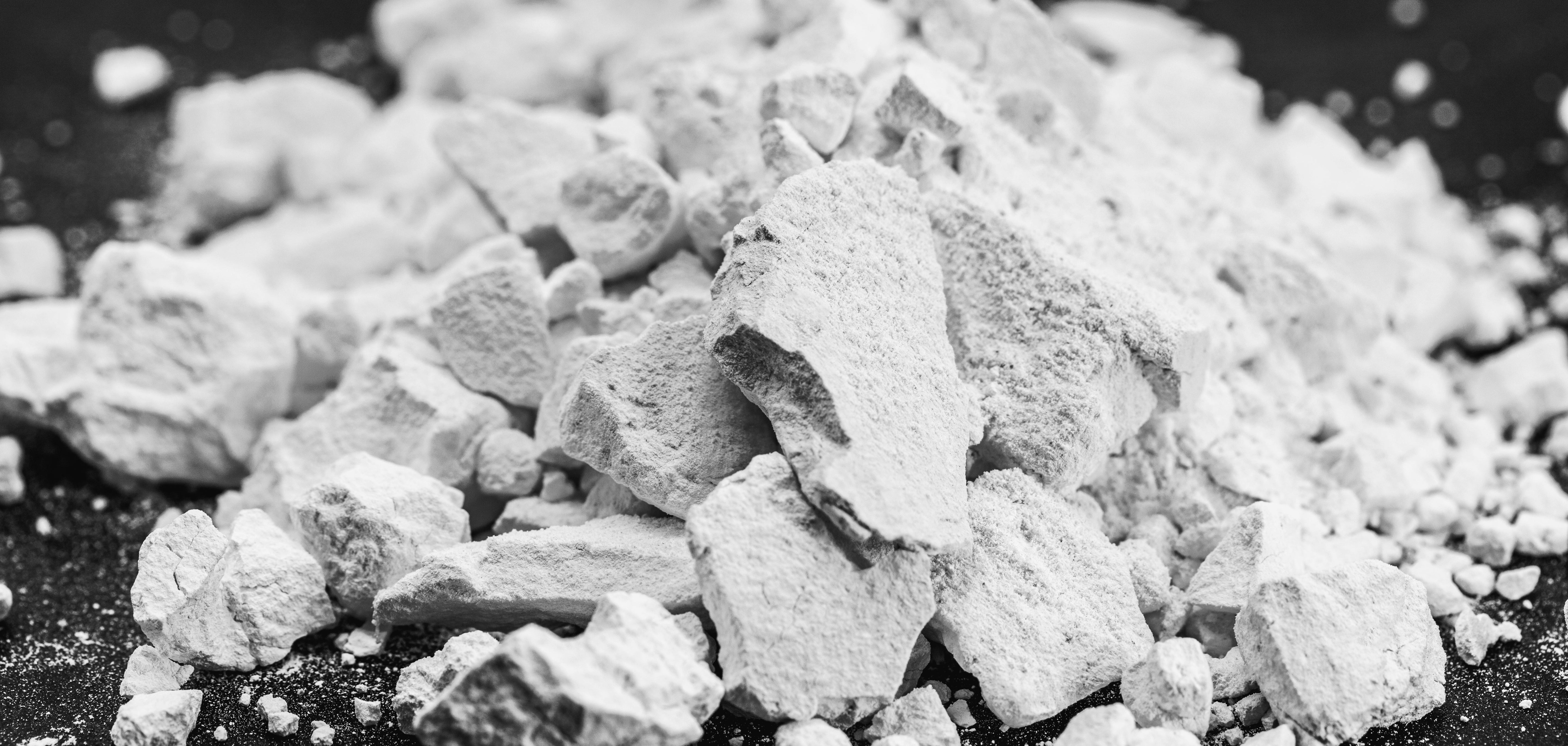
Tooth enamel is the hardest substance in the human body, but it isn’t indestructible. It’s made largely of calcium phosphate, a mineral structure that gives enamel its strength, density, and resistance to wear.
Throughout the day, your teeth cycle through two opposing processes:
- Demineralization: Acids from food and drinks pull calcium and phosphate out of enamel.
- Remineralization: Saliva and minerals help restore some of what’s lost.
This balance matters. When demineralization outpaces remineralization, enamel weakens.
Everyday acids—coffee, citrus, soda—lower the pH in your mouth. When pH drops, calcium leaves the enamel surface. You don’t feel it happening, but over time, those tiny losses add up.
And while brushing removes plaque and bacteria, brushing alone doesn’t rebuild minerals. Without calcium present, you’re cleaning the surface—but not restoring what erosion takes away.
What Happens When Teeth Don’t Get Enough Calcium?
Enamel loss is sneaky. It doesn’t announce itself with pain or drama. It shows up slowly, often years after the damage begins.
Some common signs include:
- Increased sensitivity, especially to cold or sweet foods
- Weaker enamel, which raises the risk of cavities
- Dull or yellowed teeth, as thinner enamel reveals dentin underneath
- Greater susceptibility to erosion from acids and grinding
The key thing to know is that enamel loss is cumulative. Small daily losses compound over time, which is why prevention and maintenance matter far more than last-minute fixes.
Dietary Sources of Calcium
Calcium-rich foods support your entire body—including your teeth. Here are some common sources:
- Dairy: milk, yogurt, cheese
- Leafy greens: kale, collards, bok choy
- Fortified foods: plant-based milks, cereals
- Nuts and seeds: almonds, sesame, chia
But diet has limitations when it comes to enamel.
Calcium from food is absorbed into the bloodstream and prioritized for essential systems like bones, muscles, and nerve signaling. Meanwhile, acids in your mouth continue to pull minerals directly from the tooth surface.
That means even a calcium-rich diet doesn’t fully protect enamel from local mineral loss. Diet is necessary—but not always sufficient on its own.
Why Calcium for Teeth Is Different from Calcium for Bones
Bones are living tissue. They break down and rebuild constantly. Teeth are different.
Once enamel forms, it doesn’t regenerate. Teeth rely on surface-level mineral support to stay strong. That’s why topical delivery—calcium applied directly to teeth—matters.
Think of it this way: Dietary calcium supports your body systemically. Topical calcium supports enamel where damage actually happens.
Calcium-Infused Toothpaste: A Smarter Way to Supplement
Calcium-infused toothpaste isn’t meant to replace a healthy diet. It’s a supplemental strategy that works locally, consistently, and without adding friction to your routine.
When calcium is present during brushing, it helps support remineralization at the tooth surface, reinforcing enamel right where acids do their damage. And because brushing is already a twice-daily habit, it’s one of the easiest ways to deliver consistent mineral support.
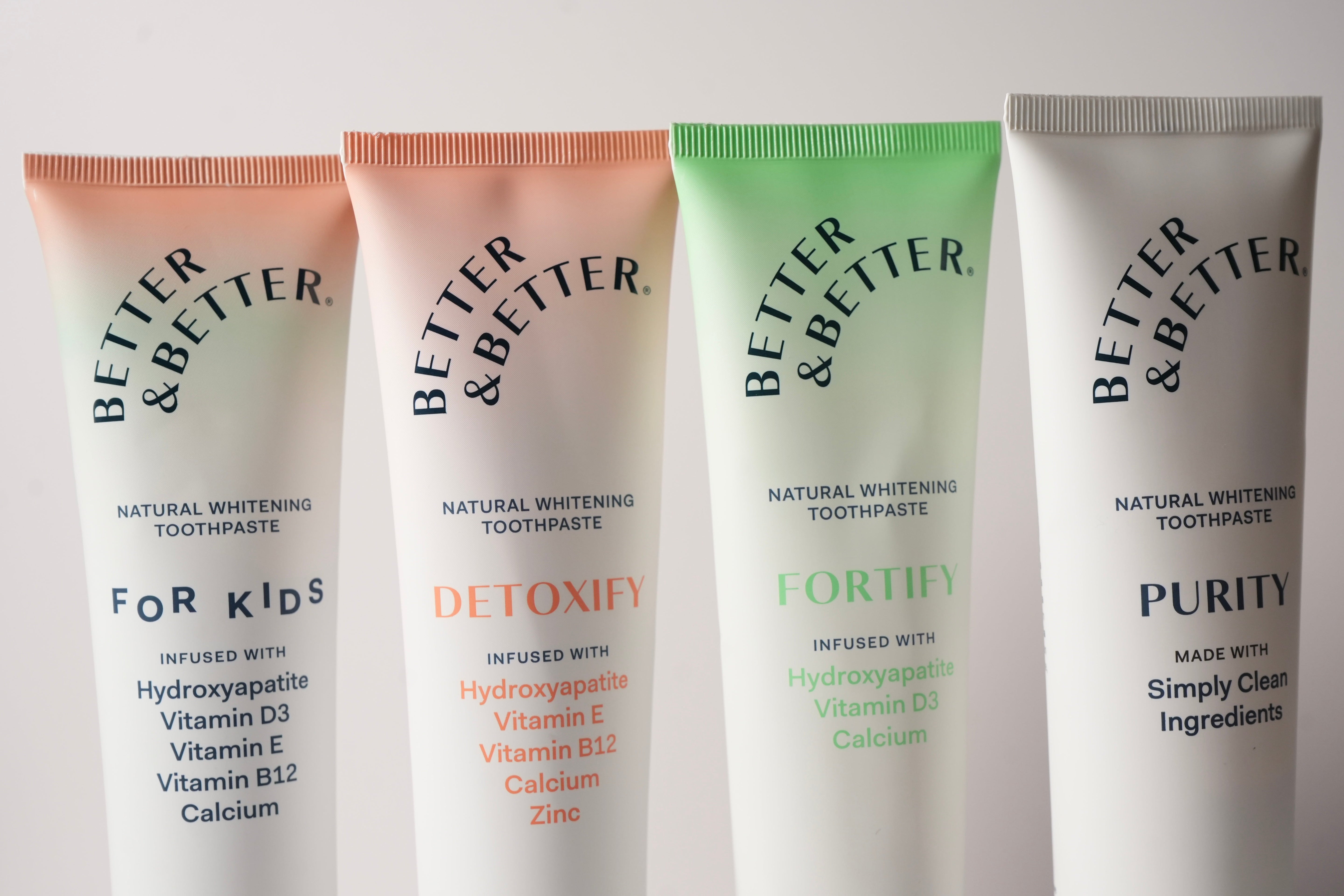
At Better & Better, we have three calcium-infused formulas designed to strengthen enamel in different ways, depending on what your mouth needs.
Fortify
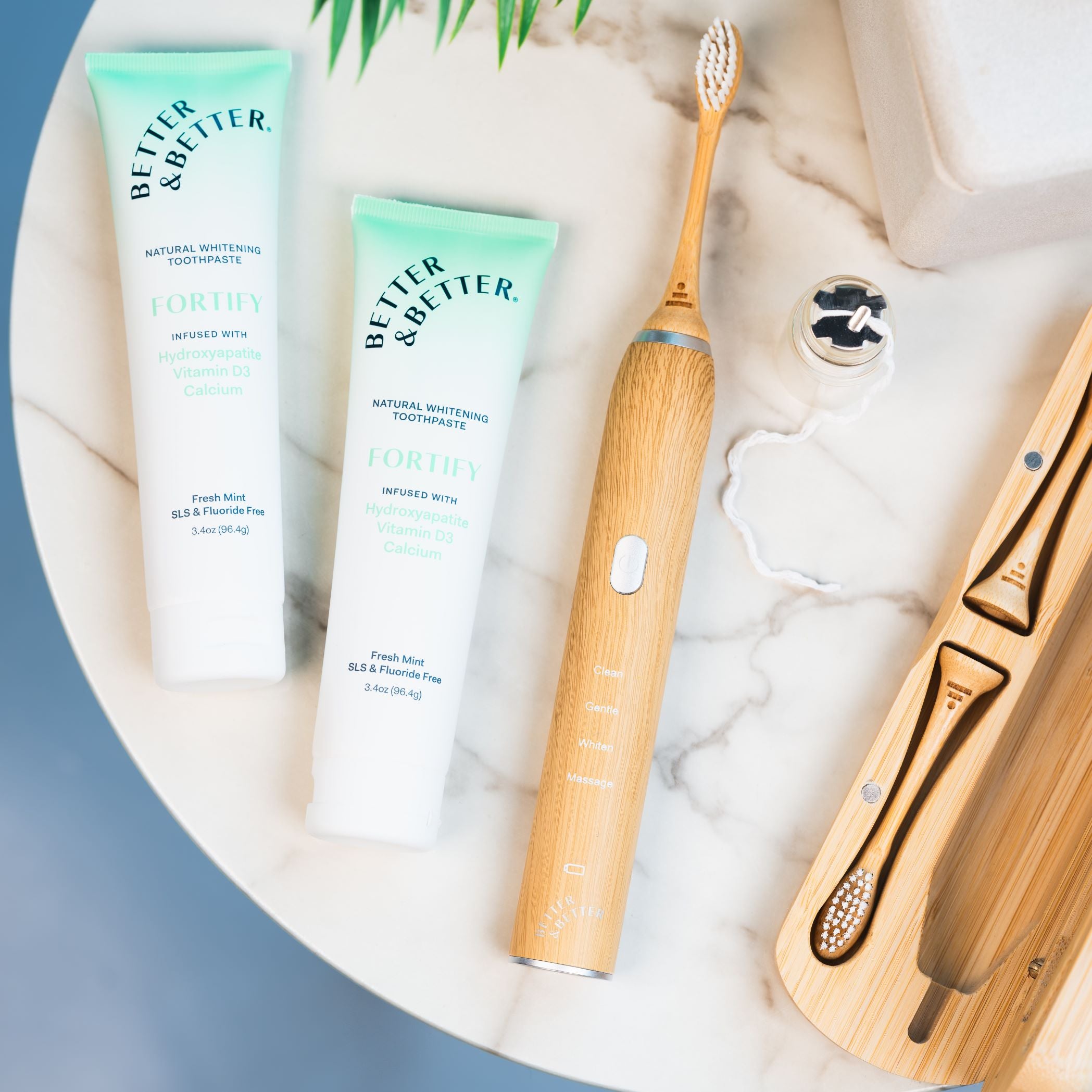
Fortify is built for enamel strength and sensitivity support. It combines hydroxyapatite, vitamin D3, and calcium to help rebuild enamel and reinforce tooth structure—no fluoride needed.
- 64 mg of calcium per brush
- Hydroxyapatite strengthens enamel and supports remineralization
- Fluoride-free, with no compromises on protection
Detoxify
Think of Detoxify as a deep clean for your mouth. Along with a microdose of calcium, it includes a unique blend of bacteria-fighting micronutrients.
- Vitamin B12, vitamin E, and zinc help fight plaque and odor-causing bacteria
- Hydroxyapatite restores enamel and strengthens teeth
- Supports a healthier oral microbiome—all without fluoride
Kids Multivitamin Toothpaste
Growing teeth need minerals too. This fluoride-free kids’ toothpaste supports developing enamel and healthy gums while making brushing something kids actually enjoy.
- Infused with hydroxyapatite and calcium to fight cavities
- Kid-friendly doses of vitamins D3, B12, and E
- Naturally sweetened with organic xylitol and watermelon
A Simple Protocol to Support Your Enamel
Enamel strength isn’t a one-time achievement. It’s a daily habit. Here’s a simple approach:
- Brush twice daily with a calcium-infused toothpaste
- Avoid brushing immediately after acidic foods or drinks
- Stay hydrated to support saliva production
- Limit frequent acid exposure when possible
- Keep up with regular dental checkups
Strong teeth don’t come from shortcuts. They come from showing up twice a day (and giving enamel what it needs to stay intact).